See and map lymphedema where it happens
LymphScanner
LymphScanner gives clinicians objective visibility into localized tissue-water changes - helping them see where abnormalities occur and track how they change over time.


LymphScanner - Localized tissue-water assessment for lymphedema
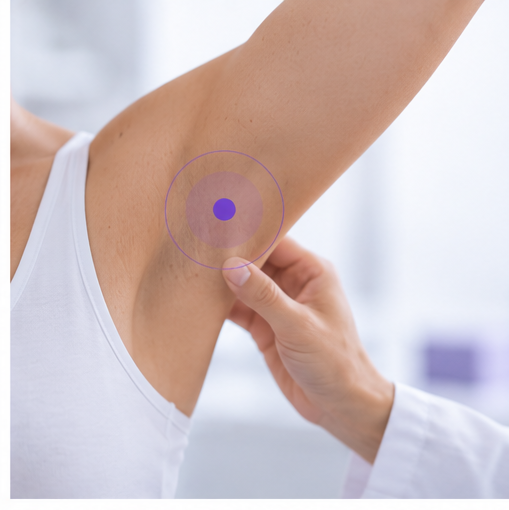
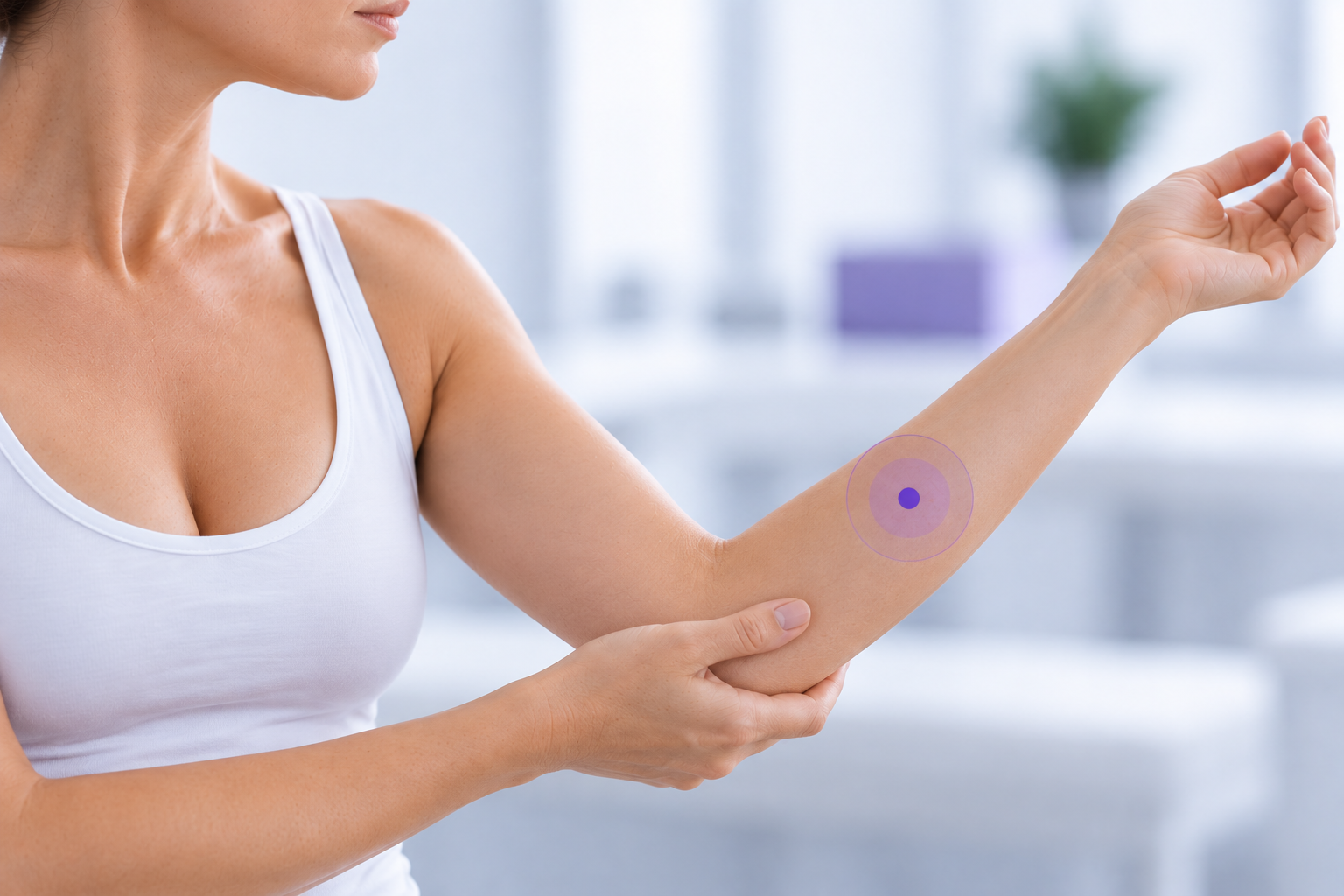
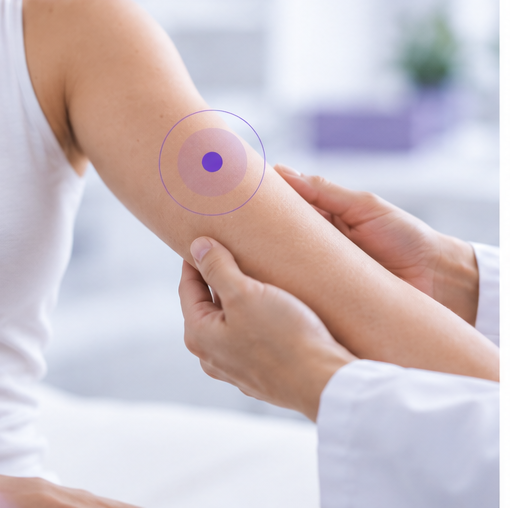
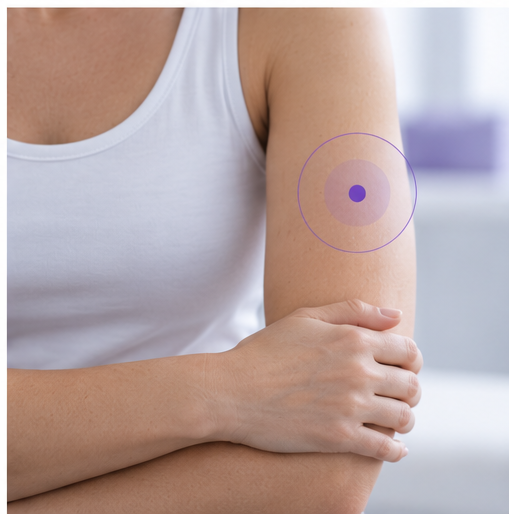
Lymphedema is not always evenly distributed. Especially in early or mild stage, tissue-water abnormalities can be localized to specific regions of the skin and subcutaneous tissue rather than presenting as uniform swelling of an entire limb or treated area.
LymphScanner gives clinicians a fast, non-invasive way to spot these localized tissue-water abnormalities, supporting earlier recognition of changes associated with developing lymphedema.
Using Tissue Dielectric Constant (TDC) technology, LymphScanner measures local tissue water and displays the result as Percentage Water Content (PWC). Measurements take only seconds and can be performed at multiple anatomical sites to identify regional differences, compare affected and reference tissues, and follow changes over time.
This localized approach adds a different dimension to traditional lymphedema assessment, being particularly valuable for early lymphedema detection and prospective surveillance. While circumference and volume measurements tell clinicians whether a limb has become larger, LymphScanner provides objective information about tissue water at the specific site being measured.
Use LymphScanner to support:
• Lymphedema surveillance
• Identification of localized tissue-water abnormalities
• Regional tissue-water mapping
• Comparison of affected and reference tissues
• Longitudinal monitoring
• Assessment of treatment response
Don't just measure the limb. Understand what is happening in the tissue.
LymphScanner is a CE marked medical device (CE0537). FDA clearance 510(k).

Benefits
- Support early detection of localized tissue-water changes
- Spot regional abnormalities that may occur before clinically significant swelling
- Assess localized tissue water in seconds
- Map multiple areas of interest across tissue at risk
- Compare affected and reference tissues using PWC ratios
- Support prospective lymphedema surveillance
- Track the same anatomical sites over time
- Objectively monitor local tissue-water changes during treatment
- Assess areas difficult to evaluate with limb-volume methods, including the breast and trunk
- Portable, non-invasive and designed for clinical use
Educational materials
Educational materials




Ready to turn measurement into meaningful insight?
Discover how Delfin’s measurement technologies can support your research and clinical work.

FAQs
FAQs
LymphScanner measures localized tissue water in the skin and upper subcutaneous tissue using Tissue Dielectric Constant (TDC) technology.
The measurement is displayed as Percentage Water Content (PWC), providing an objective value for the specific anatomical site being assessed.
Because each measurement is localized, clinicians can compare different anatomical regions and follow tissue-water changes over time.
LymphScanner is designed for healthcare professionals working with lymphedema, including lymphedema therapists, physical and occupational therapists, oncology rehabilitation professionals, physicians and clinical researchers.
It can support lymphedema surveillance, clinical evaluation and treatment-response monitoring.
LymphScanner uses Tissue Dielectric Constant (TDC) technology.
A low-power electromagnetic field interacts with the tissue beneath the probe. Because the dielectric properties of tissue are strongly influenced by water, the reflected signal can be used to determine localized tissue water.
LymphScanner converts this measurement into Percentage Water Content (PWC), providing results within seconds.
The effective measurement depth is approximately 2.5 mm, focusing the assessment on the skin and upper subcutaneous tissue.
The methods answer different clinical questions.
Circumference and volume measurements ask:
Has the limb become larger?
LymphScanner asks:
Is tissue water different at this specific location?
Lymphedema-related tissue-water changes can be regional rather than evenly distributed throughout a limb. Localized measurement therefore allows clinicians to assess specific areas of interest that may not be represented by whole-limb measurements.
LymphScanner is intended to complement clinical examination and other appropriate assessment methods - not replace them.
Both methods provide objective information related to tissue fluid, but they assess it differently.
Bioimpedance spectroscopy (BIS) evaluates electrical impedance across a larger limb segment and is commonly used to assess limb-level fluid changes.
LymphScanner uses TDC to measure localized tissue water at individual anatomical sites.
This makes it possible to investigate regional differences - for example within the arm, breast or trunk - and repeatedly monitor specific areas of interest.
The methods therefore provide different and potentially complementary information.
Absolute tissue-water values vary between anatomical sites and individuals.
When an appropriate reference site is available, comparing anatomically corresponding locations provides a PWC ratio that expresses tissue-water asymmetry.
For example, a ratio of 1.20 means that the measured tissue-water value at one site is 20% higher than at its reference site.
Reference research involving 403 healthy women found that only 0.70% had an inter-arm TDC ratio greater than 1.20. This makes the ratio useful for understanding whether observed asymmetry is common or unusual relative to healthy reference data.
A ratio threshold is not a biological point at which lymphedema begins and should not be interpreted as a stand-alone diagnosis.
This is directly grounded in the new 403-woman reference paper we've added to the evidence base.
Yes. Breast cancer-related lymphatic dysfunction can involve the arm, hand, breast and trunk, and changes may be regional rather than uniformly distributed.
Localized tissue-water assessment allows clinicians to examine areas affected by surgery, lymph-node intervention or radiation and follow selected anatomical sites longitudinally.
Where an appropriate corresponding reference site exists, PWC ratios can add patient-specific information about tissue-water asymmetry.
Clinical interpretation should always consider treatment history, symptoms, examination and other relevant assessment findings.
Localized TDC measurement has been studied in the breast and trunk, areas where conventional limb-volume methods are difficult to apply.
This is an important advantage of localized tissue-water measurement: clinicians are not restricted to evaluating an entire extremity.
The available research includes studies specifically investigating breast edema and truncal lymphedema using TDC.
LymphScanner does not image lymphatic vessels or dermal backflow.
ICG lymphography or lymphofluoroscopy visualizes superficial lymphatic transport and dermal backflow patterns. LymphScanner measures localized tissue water.
Research comparing lymphofluoroscopy with clinical measurements has found associations between dermal backflow and increased local tissue-water measurements at several anatomical regions.
LymphScanner can therefore provide information about localized tissue-water abnormalities associated with altered lymphatic drainage, but it should not be described as directly detecting or imaging dermal backflow.
Yes. LymphScanner measures localized tissue water in the skin and upper subcutaneous tissue, where early lymphedema-related changes can occur.
Early lymphedema does not always present as uniform or visible swelling. Tissue-water accumulation can be localized to specific regions, and patients with early mild lymphedema may have few or no noticeable symptoms.
By assessing multiple anatomical sites, LymphScanner can help clinicians spot localized tissue-water abnormalities, compare them with appropriate reference sites and monitor changes over time.
LymphScanner supports clinical assessment and surveillance; it is not intended to provide a stand-alone diagnosis of lymphedema.
Early lymphatic changes are not necessarily distributed evenly across an affected region.
Imaging studies using ICG lymphography have demonstrated regional dermal backflow patterns associated with lymphatic dysfunction. Research comparing lymphofluoroscopy with clinical assessment has also found that increased local tissue-water measurements are associated with dermal backflow in several anatomical regions.
LymphScanner does not image lymphatic vessels or dermal backflow directly. Instead, it measures the localized tissue-water changes that can occur in regions affected by altered lymphatic drainage.
By measuring multiple sites, clinicians can look for areas of elevated tissue water, compare them with corresponding reference sites and build a clearer picture of how tissue-water abnormalities are distributed.
Instruments for medical professionals
Instruments for medical professionals
Instruments for professionals


Prospective surveillance to treatment monitoring
LymphScanner brings localized tissue-water information into everyday lymphedema care.
Rather than relying only on limb appearance or whole-limb change, clinicians can assess specific anatomical areas of interest associated with the patient's treatment history, lymphatic risk, symptoms and clinical findings.
1. Prospective surveillance
Establish baseline measurements where feasible and follow localized tissue-water values and ratios over time. Regular, objective assessment can help clinicians recognize emerging changes rather than waiting for visible swelling or patient-reported symptoms.
LymphScanner's rapid, portable and localized measurements make it practical for repeated assessment as part of a prospective surveillance program.
2. Support early detection
The purpose of surveillance is to recognize lymphedema-related changes early in the disease process, while tissue and symptom burden may still be low.
Early lymphatic dysfunction may produce localized fluid accumulation rather than uniform swelling of an entire limb. By assessing multiple anatomical sites, LymphScanner can help clinicians spot localized tissue-water abnormalities that warrant closer clinical evaluation, even when whole-limb changes are still small.
3. Map areas of interest
Clinicians can assess multiple sites to understand where changes are occurring and how they are distributed across an at-risk region.
This is particularly relevant because lymphatic dysfunction and dermal backflow can create regional patterns of tissue-water accumulation rather than uniform swelling.
LymphScanner does not image lymphatic vessels or dermal backflow directly. It measures the localized tissue-water changes that may occur in regions affected by altered lymphatic drainage.
4. Monitor change over time
Document areas of interest and return to the same anatomical locations during follow-up to assess how PWC values, ratios and regional tissue-water patterns evolve over time and with treatment.
Beyond the limb
Localized measurement makes it possible to assess areas that cannot easily be characterized using conventional limb-volume techniques, including the breast and trunk.
Monitor patients at risk. Spot changes early. Map the tissue. Track change over time.
Choosing the right instrument for lymphedema and tissue water assessment
LymphScanner is Delfin's dedicated medical device for localized lymphedema assessment. It combines the established TDC measurement principle with a portable, force-monitored probe and workflows designed for rapid localized measurements and PWC comparison.
LymphScanner
Designed for clinical lymphedema assessment, surveillance and treatment monitoring. Measures localized tissue water at approximately 2.5 mm effective depth and provides PWC values and ratios.
MoistureMeterD Compact
Uses the same TDC measurement principle and measurement depth. Its extensive clinical research provides an important part of the scientific evidence supporting localized TDC measurement.
Multiprobe MoistureMeterD
A research-oriented system enabling TDC measurements at multiple effective depths from 0.5–5.0 mm.
A substantial body of published TDC research has used MoistureMeterD Compact and the corresponding 2.5-mm MoistureMeterD probe. Because these instruments use the same underlying TDC principle and comparable measurement depth, this research contributes to the scientific foundation of LymphScanner.
%20(1)%20uusi%20.jpeg)